Equipment cooling is about giving heat a path out. A fan helps only when air can enter, flow across the hot parts and leave. This guide covers the main considerations. It is general advice, so follow the manufacturer guidance for any device you cool.
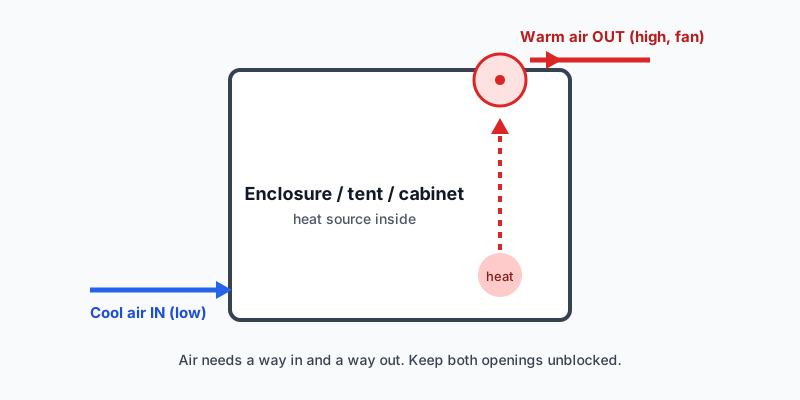
Define the airflow path
Decide where air comes in and where it leaves. A common arrangement is cool air in low, warm air out high. If both openings are on the same side, air may recirculate and cooling will be poor.
Size to the opening
A 250mm fan is large. It suits big cabinets, open frames and room-scale airflow, not a small electronics box. For smaller enclosures, a smaller fan fits better. See 250mm vs 200mm Cooling Fan: Which Size Should You Choose?.
Filters and dust
Filters keep dust out but restrict airflow, so choose a fan with some margin and clean the filter regularly. In dusty places, expect to clean the fan blades and guard too.
Voltage and noise
A 12V DC fan can often be powered from the same low-voltage source as the equipment, or from its own power unit. Adjustable speed lets you trade noise for cooling as needed. See How a Speed Controller Helps a DC Cooling Fan.
Monitor temperature
Do not guess. Use a thermometer or the equipment temperature readout to check that the fan is helping. If temperatures keep rising, you need more airflow or less heat, and not only a fan.
Know the limits
A general-purpose fan is not a substitute for the cooling specified by the maker of sensitive or high-power equipment.