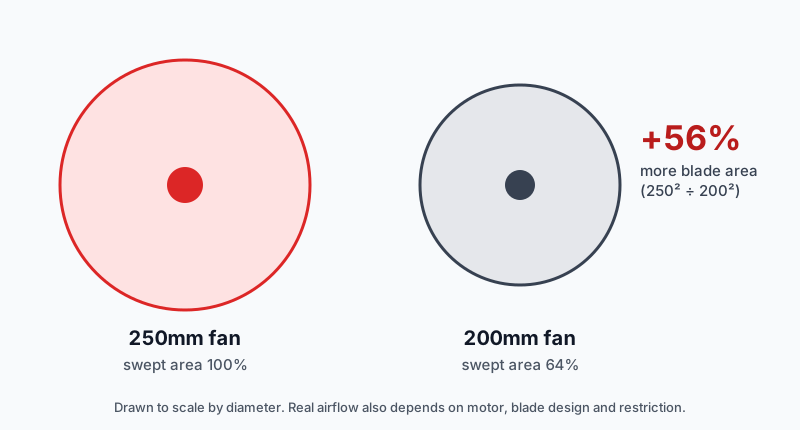
The difference between 200mm and 250mm sounds small, but blade area grows with the square of the diameter. A 250mm fan has about 56% more swept area than a 200mm fan (250² ÷ 200² = 1.5625). All else equal, that lets it move a given amount of air at a lower speed, which usually means less noise.
All else is rarely equal. Motor power, blade design and the restriction in front of the fan all change the result, so use size as a guide and not a guarantee.
When 250mm makes sense
- You want gentle, wide air movement in a workshop or hobby room.
- You have a large opening, a big enclosure or a tent that needs steady exchange.
- You prefer to run the fan slowly for lower noise.
When 200mm is the better pick
- Clearance is tight or the mounting space is fixed.
- You are replacing an existing 200mm fan and want matching holes.
- Portability matters: the smaller fan is lighter and easier to place.
Noise and speed
A bigger fan can be quieter for the same airflow because it does not need to spin as fast. That advantage depends on you being able to turn it down, which is why a speed controller matters. See How a Speed Controller Helps a DC Cooling Fan.
Do not forget the power unit
A larger fan typically draws more current. Whatever size you choose, confirm the supply can power it with some headroom. The featured 250mm listing does not state current, so ask the seller if it matters for your setup.
Rule of thumb
If you have the space and want quiet airflow, go 250mm. If space is tight or you need a drop-in match, go 200mm. For the featured product, see the featured product page.